
Discover Birkirkara, Malta’s vibrant heart. Explore its rich history, stunning landmarks, modern lifestyle & why it’s a top choice for property buyers in Malta.
Published by Paul Schembri – Your Trusted Property Specialists in Malta
Introduction
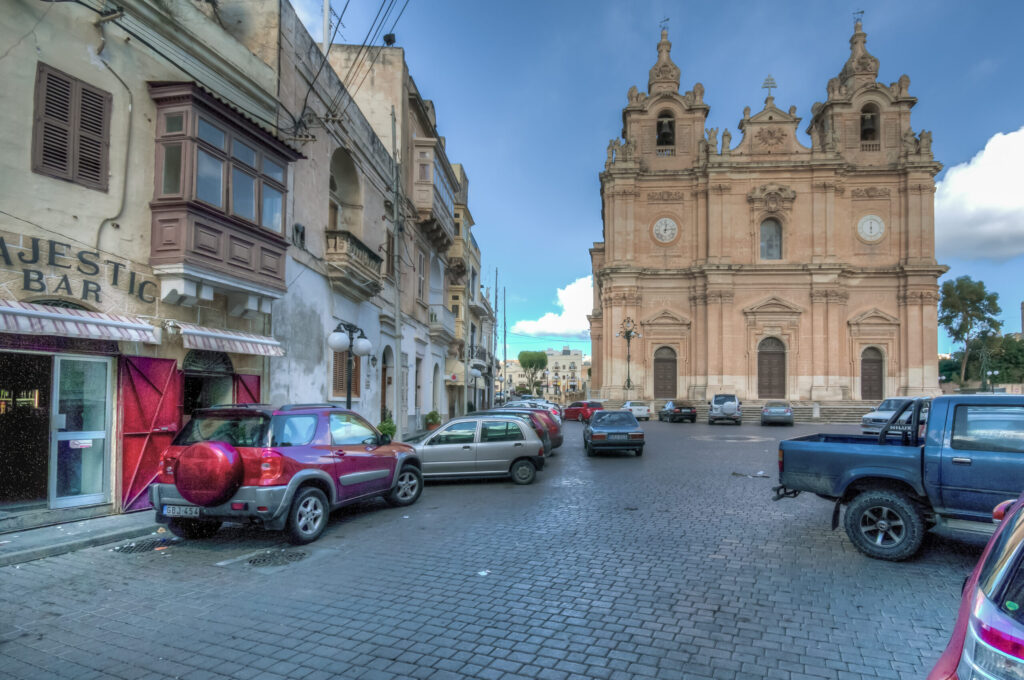
If you are considering buying or renting property in Malta, Birkirkara — affectionately known by locals as B’Kara — deserves to be at the very top of your list. Sitting at the geographical heart of the main island, this city seamlessly blends centuries of rich Maltese history with the conveniences and energy of modern urban life. It is Malta’s second most populous city, home to around 24,356 residents as of 2020, and it punches well above its weight in terms of culture, commerce, connectivity, and community spirit.
Whether you are a first-time buyer, a seasoned investor, or a family looking for a place to put down roots, understanding Birkirkara fully is essential. In this guide, we take you on a deep dive into the town’s history, landmarks, culture, lifestyle, and property landscape: everything you need to know before making one of the most important decisions of your life.
A Name With Meaning: What Does “Birkirkara” Mean?
The name Birkirkara is believed to derive from the Arabic words meaning “cold water” or “running water”, a reference to the natural valley that runs through the town and the freshwater springs that once flowed there. In earlier centuries, the name was written as Birchircara, following Italian orthographic conventions. Today it is commonly abbreviated as B’Kara or simply Kara among locals, and its official postal abbreviation is BKR.
The city’s coat of arms features a plain red cross surmounted by a crown, and its Latin motto — In hoc signo vinces (“In this sign, you shall conquer”) — speaks to the deep Catholic heritage that has shaped its identity for hundreds of years.
Ancient Roots: Birkirkara Through the Ages
Prehistoric and Early History
While the written record for Birkirkara begins in the medieval period, archaeological evidence strongly suggests that the area has been inhabited for millennia. Traces of human settlement from the Phoenician and Roman periods have been discovered in and around the locality, pointing to a continuity of habitation that stretches back thousands of years.
The Medieval Period
The first documented mention of Birkirkara appears in 1402, when a reference is made to the Cappella of Birkarkam — generally understood to be a clerical error for Birkirkara. By the time the 1436 Ecclesiastical Report was compiled — one of the most important historical surveys of parishes across Malta and Gozo — Birkirkara had already established itself as the largest parish on the island. This is a remarkable distinction that underlines just how central this locality has been to Maltese life for over six hundred years.
During the latter half of the Middle Ages, Birkirkara functioned as a mother parish to a vast surrounding territory. Many of the towns and villages that Maltese people consider entirely distinct today — including Sliema, St. Julian’s, Msida, Ħamrun, Santa Venera, Attard, Balzan, and Lija — were once part of Birkirkara’s original parish boundaries. The city was, in a very real sense, the cradle from which much of modern urban Malta was born.
The Knights of St. John and the Great Siege
When the Knights of St. John arrived in Malta in 1530, Birkirkara’s fortunes became intertwined with those of the Order. The Turkish invasion and the Great Siege of 1565 left Birkirkara in a devastated state, but the resilience of its people was remarkable. In the years that followed, a programme of rebuilding and church construction transformed the townscape. The Old Parish Church was among the first of these new buildings, constructed in the characteristic Renaissance style popular in the immediate aftermath of the Great Siege.
Nearly a century later, an even grander church would be commissioned, dedicated to Saint Helen — a building that would eventually become the city’s defining landmark and the focal point of its spiritual and social life.
The Baroque Era and the Basilica of St. Helen
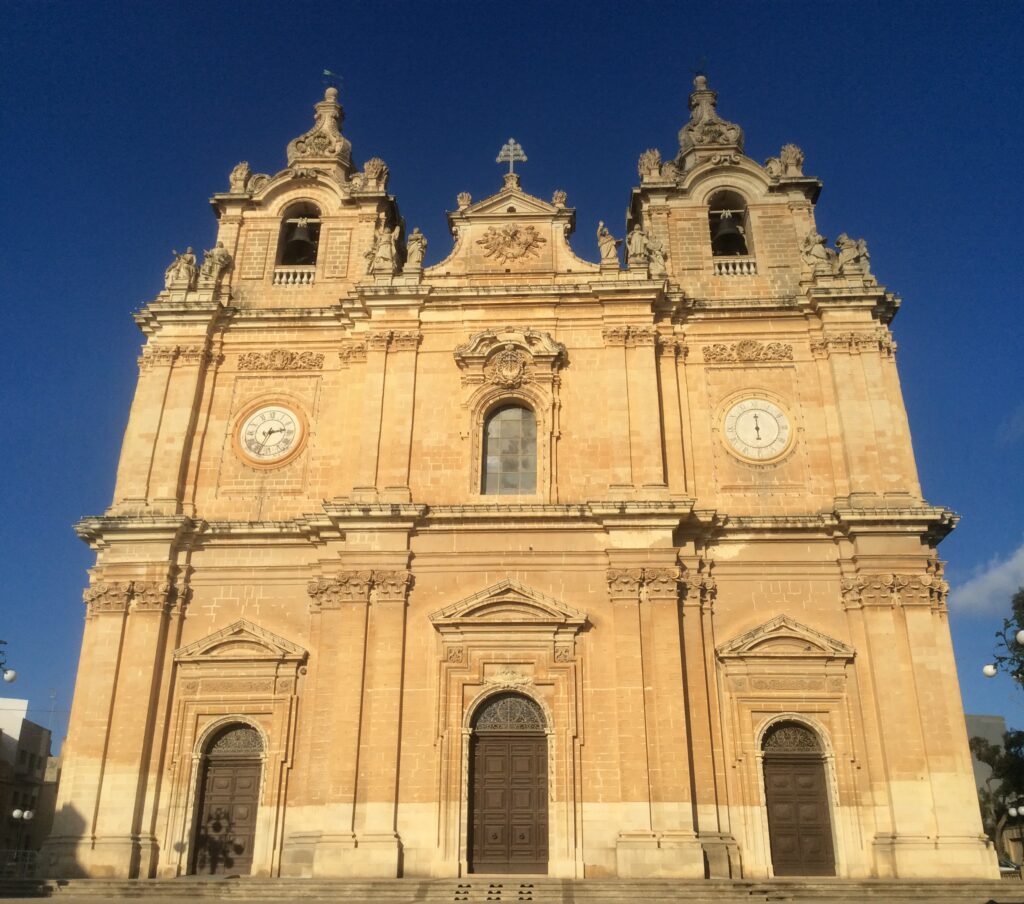
The Basilica of Saint Helen was completed in 1727 and stands today as one of the finest examples of Baroque ecclesiastical architecture in Malta. Its interior is adorned with exceptional works by the great Maltese painter Francesco Zahra, and it houses the celebrated statue of Saint Helen, carved by master sculptor Salvu Psaila in 1837. But perhaps its most talked-about feature is its bell — installed in 1932, it is the largest church bell in all of Malta and one of the largest in Europe. The sheer size and resonance of this bell is something that visitors and residents alike speak of with pride.
Birkirkara’s religious heritage is not limited to the Basilica. The city is home to approximately 18 churches, each with its own story. Among the most notable is the Church of Our Lady of Victories in the area known as Has-Sajjied, a Baroque gem built between 1728 and 1736 whose internal pilasters follow the Tuscan style, with a dome featuring floral motifs and emblems from the Litany of the Blessed Virgin Mary. The Santwarju Madonna tal-Herba is considered the oldest church in B’Kara and houses a remarkable collection of ex-voto paintings and offerings. For lovers of the avant-garde, the modernist Church of St. Thérèse of Lisieux, designed by Italian architect Giorgio Pacini and built between 1965 and 1982, is unlike anything else on the island — locals lovingly call it “the spaceship.”
WWII and the Emergency Capital
During World War II, Birkirkara took on a role of national importance that is often overlooked in popular histories. As bombing raids reduced parts of the island to rubble, Birkirkara was designated as Malta’s emergency capital, a testament to its central location and logistical significance. The town’s resilience during those years of hardship remains a source of deep local pride.
Landmarks and Heritage Sites
The Wignacourt Aqueduct
Running through parts of Birkirkara and visible in the Mriehel area, the Wignacourt Aqueduct is a 16-kilometre engineering marvel built in 1610 under Grand Master Alof de Wignacourt. Constructed by the Order of Saint John, its purpose was to carry clean water from natural springs near Dingli and Rabat all the way to the new capital city of Valletta. Its stone arches, still largely intact today, are a quiet but powerful reminder of the ingenuity of the Knights’ era and remained in use well into the twentieth century.
The Old Railway Station
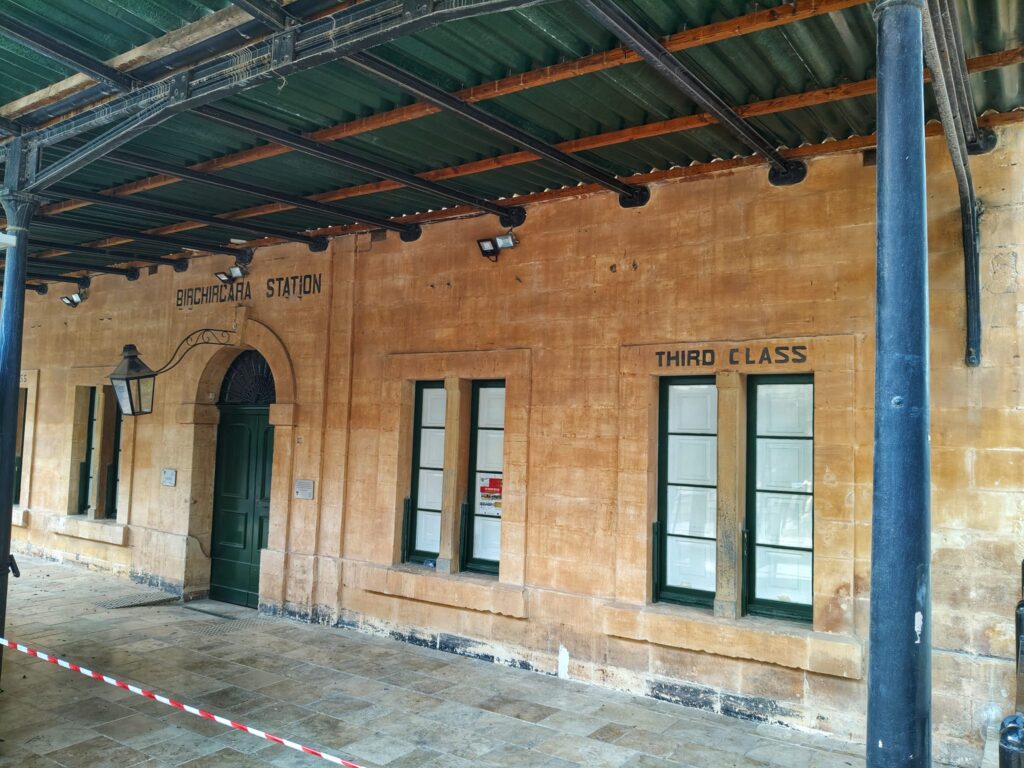
Few landmarks in Birkirkara capture the imagination quite like the Old Railway Station, now preserved within a public garden. Malta once had a working railway — a single-track line running from Valletta to Mdina (Rabat) that operated from 1883 to 1931. Birkirkara was one of its key stops, and uniquely, the station here featured doubled tracks to allow trains travelling in opposite directions to pass one another. When the railway was shut down in favour of improved roads and bus services, the station was not demolished but preserved, and today it stands with its original signage intact, a picturesque piece of industrial heritage within a leafy public garden.
The Ta’ Ganu Windmill (Il-Mithna)
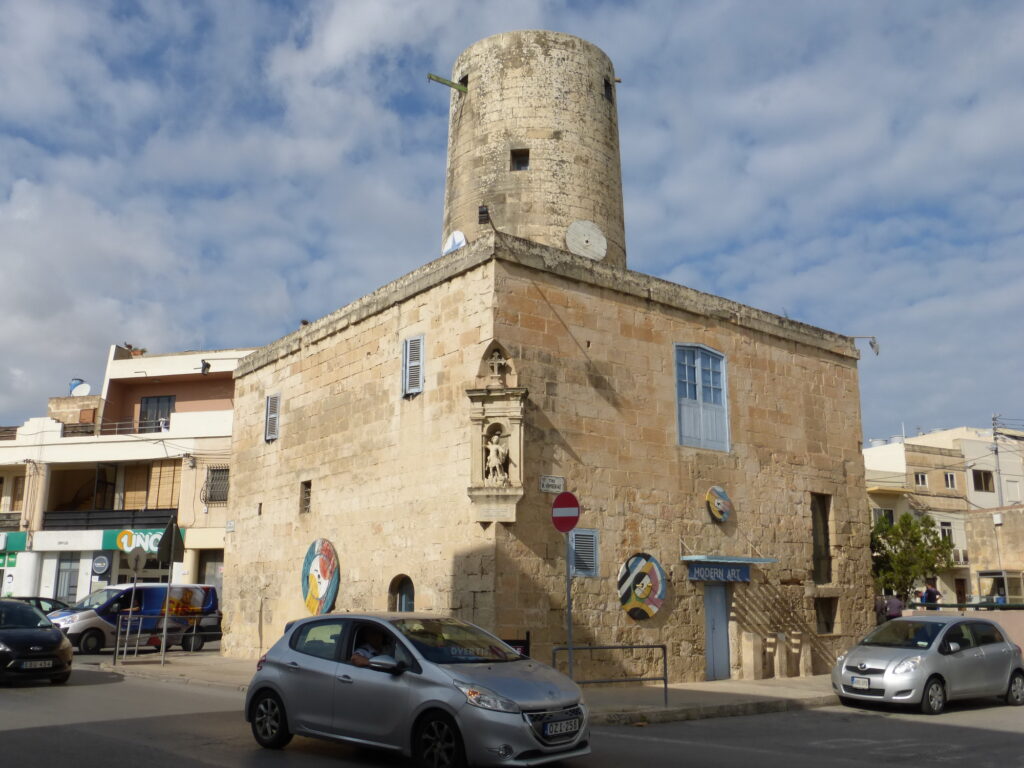
The Ta’ Ganu Windmill on Naxxar Road dates to the early eighteenth century, built during the rule of Grand Master Antonio Manoel de Vilhena. For many years it served as the studio and exhibition space of the celebrated Maltese Modernist artist Gabriel Caruana, and it is now home to the Gabriel Caruana Foundation, which organises art exhibitions and cultural events throughout the year, keeping his legacy alive for new generations.
The Simonds Farsons Cisk Brewery
Birkirkara is home to Simonds Farsons Cisk, Malta’s first and most famous brewery, whose Art Deco buildings are a landmark in their own right. Visitors can explore the Farsons Experience — a self-guided tour through the history of brewing in Malta — before sampling local beers and the iconic Maltese soft drink, Kinnie. It is as much a cultural institution as it is a commercial one.
Modern Life in Birkirkara
A Commercial and Financial Hub
Today, Birkirkara is not merely a residential city — it is one of Malta’s most important commercial centres. The Malta Financial Services Authority (MFSA), the island’s financial regulator, has its headquarters here, reflecting the city’s stature in the national business landscape. Major retail outlets, office complexes, and service providers line its main thoroughfares, making it a destination for business as much as for living.
Connectivity and Transport
One of Birkirkara’s great practical advantages is its unrivalled connectivity. Sitting at the physical centre of Malta, it offers easy access to virtually every other town and village on the island. The Kappara Junction flyover — a significant infrastructure investment — connects B’Kara directly to the coastal towns of St. Julian’s, Gżira, and Sliema via a major bypass, putting these fashionable areas within a ten-minute drive. The airport at Luqa is directly accessible via the X3 bus route, while regular bus services (routes 41, 42, 43, 54 and others) connect the city to Valletta’s main terminal.
Daily Life and Community
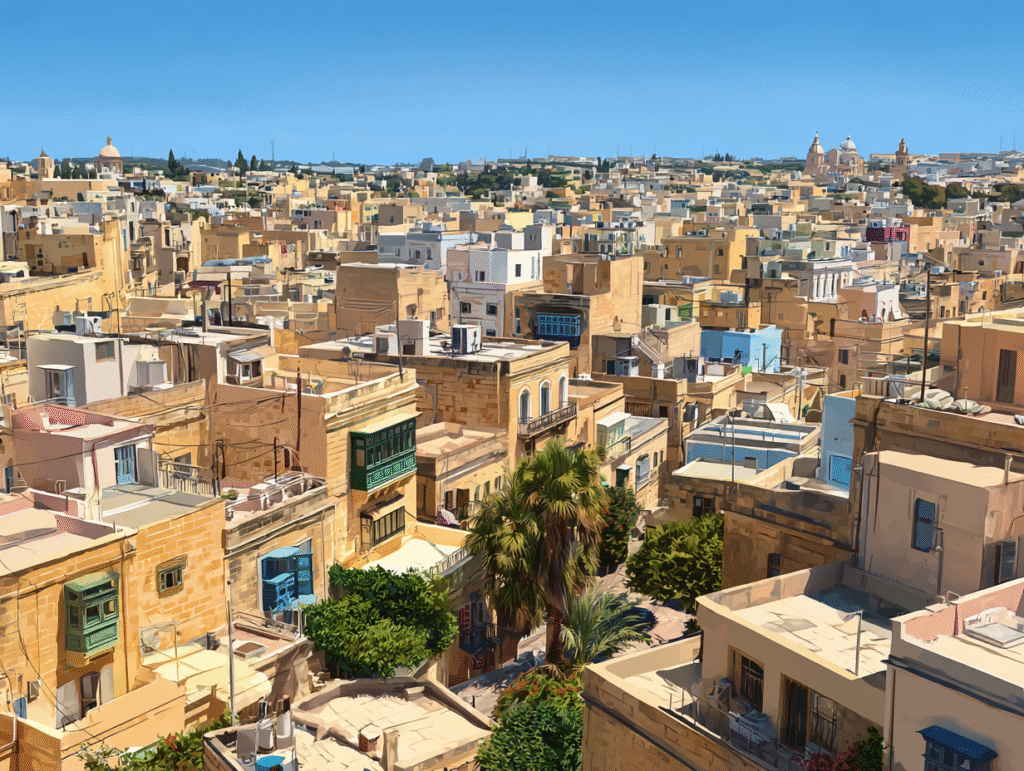
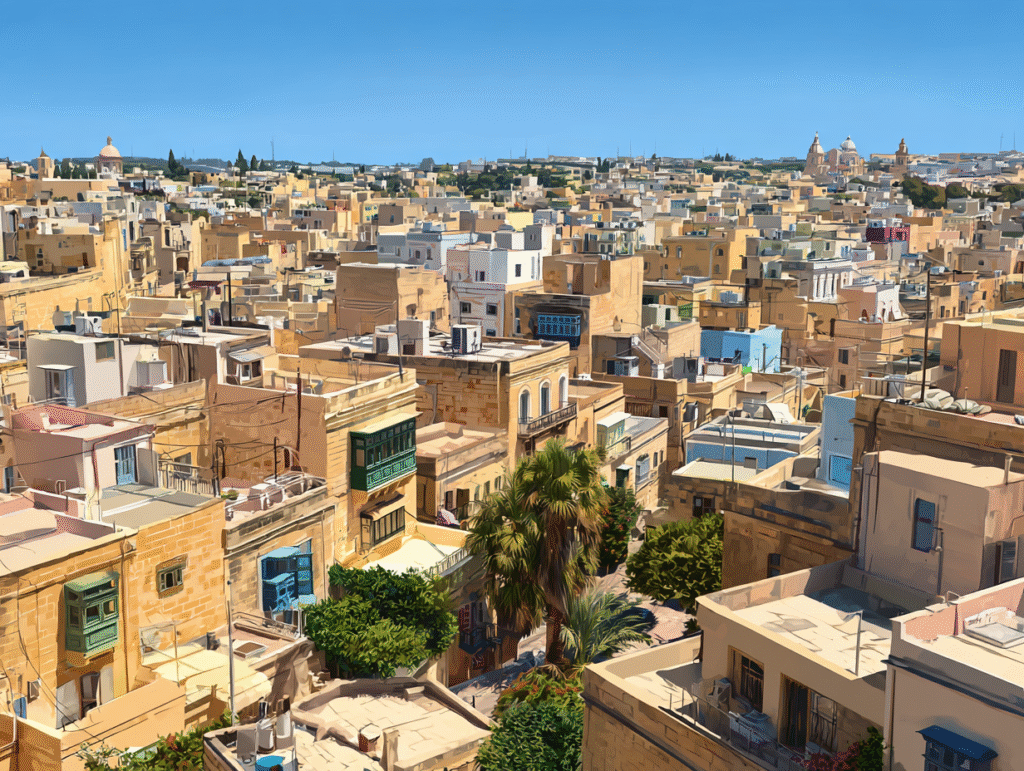
Local life in Birkirkara centres around neighbourhood cafes and Sunday masses, where residents gather after church services for coffee and pastizzi — the beloved traditional Maltese pastries. The older streets of B’Kara are a pleasure to walk: traditional limestone townhouses with wooden balconies painted in vivid blues, greens, and reds line narrow alleys that have barely changed in centuries, while newer areas offer modern apartments and townhouses. There is a strong sense of community identity here, with each of the city’s five parishes — Saint Helen, Saint Joseph the Worker, Our Lady of Mount Carmel, Saint Mary, and San Ġorġ Preca — maintaining its own distinct character and traditions.
The Feast of St. Helen
The highlight of the Birkirkara social calendar is the Feast of Saint Helen, celebrated on 18 August (or the first Sunday after that date). The city is transformed in the weeks leading up to the feast, with streets decorated in lights and bunting and the sound of band marches filling the evenings. The centrepiece is a procession featuring the stunning carved statue of Saint Helen — and in a distinction unique in Malta, this procession takes place in the morning rather than the evening, departing from the Basilica at exactly 8:00 a.m. and returning at 10:45 a.m. It is an extraordinary spectacle, with thousands lining the streets despite the August heat.
Sport: Birkirkara F.C.
Birkirkara F.C. has won the Maltese Premier League four times and participated in the 2015–16 UEFA Europa League, beating West Ham United F.C. before being eliminated via penalties. The club also eliminated Heart of Midlothian in the 2016–17 UEFA Europa League. These achievements made international headlines and gave Birkirkara — and Malta as a whole — a moment of genuine sporting pride on the European stage.
Why Buy Property in Birkirkara?
Value for Money
Compared to the glamorous but expensive coastal towns of Sliema and St. Julian’s, Birkirkara offers significantly better value for money without compromising on quality of life. Rental prices and property purchase costs are considerably lower, making it an attractive option for first-time buyers, young families, and investors seeking strong rental yields.
Central Location
For anyone working in Malta’s business districts, Birkirkara’s central position means shorter commutes in every direction. Whether your workplace is in Valletta, the finance district, the tech hubs near St. Julian’s, or the industrial areas of Mriehel, Birkirkara puts you close to all of them.
A Mix of Property Types
The city offers a diverse property market. In the older neighbourhoods, buyers can find characterful traditional Maltese townhouses with high ceilings, stone facades, wooden balconies, and internal courtyards — properties that combine heritage charm with the potential for beautiful renovation. In newer developments, modern apartments, penthouses, and maisonettes provide contemporary living with all modern conveniences.
Strong Community and Infrastructure
With its own local council, five parishes, numerous schools, medical facilities, commercial amenities, and excellent transport links, Birkirkara has everything a family or individual needs to live comfortably without depending on neighbouring towns.
Notable People
Birkirkara has produced more than its share of remarkable individuals. Iacob Heraclid, the Greco-Maltese adventurer who ruled over Moldavia in the 1560s, was born in the city. The beloved Maltese poet Dun Karm Psaila, considered the national poet of Malta, had connections to Birkirkara and is celebrated as a figure who shaped the Maltese literary identity.
Conclusion
Birkirkara is, in almost every sense of the phrase, the heart of Malta. It is old enough to carry the weight of history in every stone, and modern enough to meet the demands of contemporary life. It is a city where the sound of a church bell — the largest in the land — mingles with the buzz of commercial activity, where ancient aqueducts stand alongside modern office buildings, and where community life remains as rich and vital as it was in the medieval period.
For property buyers, it represents one of the most compelling propositions on the island: authentic Maltese character, central connectivity, strong infrastructure, and genuine value. We at [Your Agency Name] are proud to specialise in properties across Birkirkara, and we would be delighted to guide you through the opportunities this extraordinary city has to offer.
Interested in properties in Birkirkara? Contact Paul Schembri today to explore our current listings and speak with one of our local experts.