
Malta’s 2026 property market offers permanent first-time buyer grants, stamp duty cuts and strong GDP growth. Here’s what you need to know before you buy.

2026 is a good year to move in Malta. Whether you are buying your first home, investing, or passing on the family property, the timing is right. The fundamentals are solid. Furthermore, the government has made its most buyer-friendly reforms permanent. The IMF has also reviewed the market and given it a clean bill of health. In short, this is a stable, well-supported market. Let us break it all down.
Malta recorded the strongest GDP growth in the entire EU in the first half of 2025 — 3.1% in real terms, with a further 4.1% projected for 2026. That’s more than three times the EU average.
A Market Built on Solid Ground
The conversation around Maltese property used to involve a lot of nervous energy about bubbles. That conversation has changed. House prices have broadly tracked income growth. As a result, the price-to-income ratio has held steady since the early 2020s. Meanwhile, national inflation is settling around 2.2%. Moreover, the fiscal deficit will fall below the EU’s 3% threshold in 2026.
For buyers and investors, this means one thing: predictability. You can plan your finances without fear of the market running away overnight.
First-Time Buyers: The Rules Just Got a Lot Better and it is Permanently
The 2026 Budget delivers its biggest change directly to everyday buyers. For years, first-time buyer incentives needed annual renewal. That made long-term planning difficult. Now, however, the government has written these measures into permanent law. The uncertainty is gone.
Here’s what that means in practice:
- The €10,000 Grant — paid as €1,000 per year over ten years — helps manage your mortgage from day one.
- The Deposit Assistance Scheme has a higher cap. The government raised the property value limit from €225,000 to €250,000. The loan runs over 25 years, and the Housing Authority covers the interest.
- Owned a garage or agricultural land before? Good news: you keep your first-time buyer status. Only prior residential purchases now disqualify you.
For younger buyers, the Equity Sharing Scheme has been dramatically expanded. The eligibility age has dropped to 25, and separated individuals can now access the scheme for properties up to €350,000. Under this model, the Housing Authority can co-purchase up to half of the property — and you buy them out gradually over 20 years. It’s a genuine pathway to ownership for people who thought the market was out of reach.
Inheriting a Family Home? Your Stamp Duty Bill Just Halved
Estate planning just became considerably more straightforward. The threshold for the preferential 3.5% stamp duty rate on inherited primary residences (causa mortis) has doubled — from the first €200,000 to the first €400,000 of the property’s value.
To put a number on it: inheriting a €400,000 home now costs €14,000 in stamp duty, down from €17,000 previously — a direct saving of €3,000. This measure is specifically aimed at adult children who continue to live in the family home, reducing a burden that has historically forced difficult decisions at already difficult times.
Heritage Properties and Green Homes: The Biggest Incentives in the Market
If you’re considering a traditional Maltese townhouse, a property in an Urban Conservation Area (UCA), or a home that’s been vacant for years, the financial case has never been stronger:
- Zero capital gains tax and zero stamp duty on the first €750,000 of the purchase price for properties over 20 years old, in UCAs, or vacant for more than seven years.
- Restoration grants of €15,000 in Malta and €40,000 in Gozo for qualifying first-time buyers.
- VAT refunds of up to €54,000 on renovation costs.
Energy efficiency is also being rewarded. The ‘Ixtri Proprjetà Sostenibbli’ scheme continues to offer grants between €4,500 and €9,000 for homes meeting high energy-efficiency or Net Zero standards. The government has also commissioned a study on how new buildings from 2030 onwards can be designed to produce more energy than they consume — a sign of where the market is headed.
The Numbers: January 2026 Market Snapshot
January’s data shows a market in confident motion. There were 1,127 final deeds of sale — a 4.7% increase year-on-year. More tellingly, the total value of those transactions rose by 23.4% to €382.4 million, pointing to a clear shift toward higher-value properties. Individual household buyers accounted for 89% of all transactions.
The top three localities by transaction volume were San Pawl Il-Baħar (99 deeds), Birkirkara (64 deeds), and Marsaskala (52 deeds). Promise of sale agreements — the forward indicator — also grew 5.8% year-on-year, with 1,159 registered in January alone.
One development worth watching: the Property Malta Foundation is launching a Property Price Register — a live online platform showing actual contractual prices, not just asking prices. For buyers and sellers alike, this is a long-overdue move toward genuine market transparency.
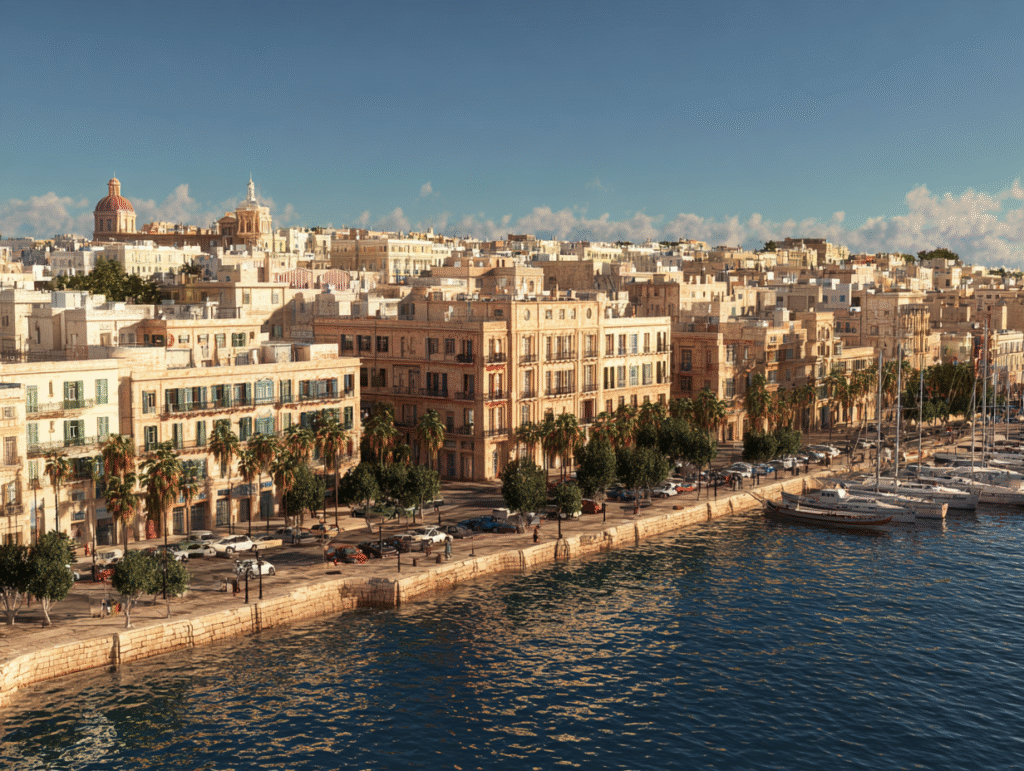
Malta’s property market in 2026 is mature, transparent, and well-supported by policy. The shift to permanent first-time buyer incentives removes the guesswork that has historically made planning difficult. The heritage and sustainability incentives remain among the most generous in Europe for the right property type.
Whether you’re stepping onto the ladder for the first time, expanding a portfolio, or managing an inheritance — the framework is in your favour. The question is how well you navigate it.
We are here to help you do exactly that. Get in touch for a no-obligation consultation and we’ll walk you through what 2026’s market means for your specific situation.